




 27 / 72

Z.magazine 2016
If you asked an amateur what a cutting edge should be like, most would
say it should be as sharp as possible. And it is true that sharp cutting
edges require less applied force. However, sharp edges tend to break
causing damage to the workpiece and increasing wear. This is why
experts seek, through targeted cutting edge preparation to strike the
perfect balance between sharpness and stabilization of the cutting
edge. This involves rounding off the edges or creating a chamfer, and
sometimes both of these together.
Safer. Faster. Cheaper.
In any event, cutting edge preparation delivers enormous benefits.
The cutting edge is made stronger and is stabilized. Applied coatings
adhere better, and the cutting chip flow is optimized, as are the
lubricating properties and the temperature compensation. All in all,
process reliability is increased, tool performance is enhanced, and
tool costs are lowered due to significantly extended service lives.
The Architecture of Efficiency
Given the many benefits, it should come as no surprise that ever more
ingenious cutting edge architectures are being developed and tested.
Depending on the desired shape, edges can be ground, brushed, shot
peening and WPC. The most efficient type of architecture—and whether
it should or should not have a waveform—symmetrical or asymmetric—
depends on the application and on the cutting materials being employed.
Given all these possible options, the question remains as to how cutting
edge preparations can be calculated, measured and verified—including
radius, chamber, K-factor, form and chipping. At the end of the day,
defective preparations lead in turn to the problems that they are actually
intended to prevent.
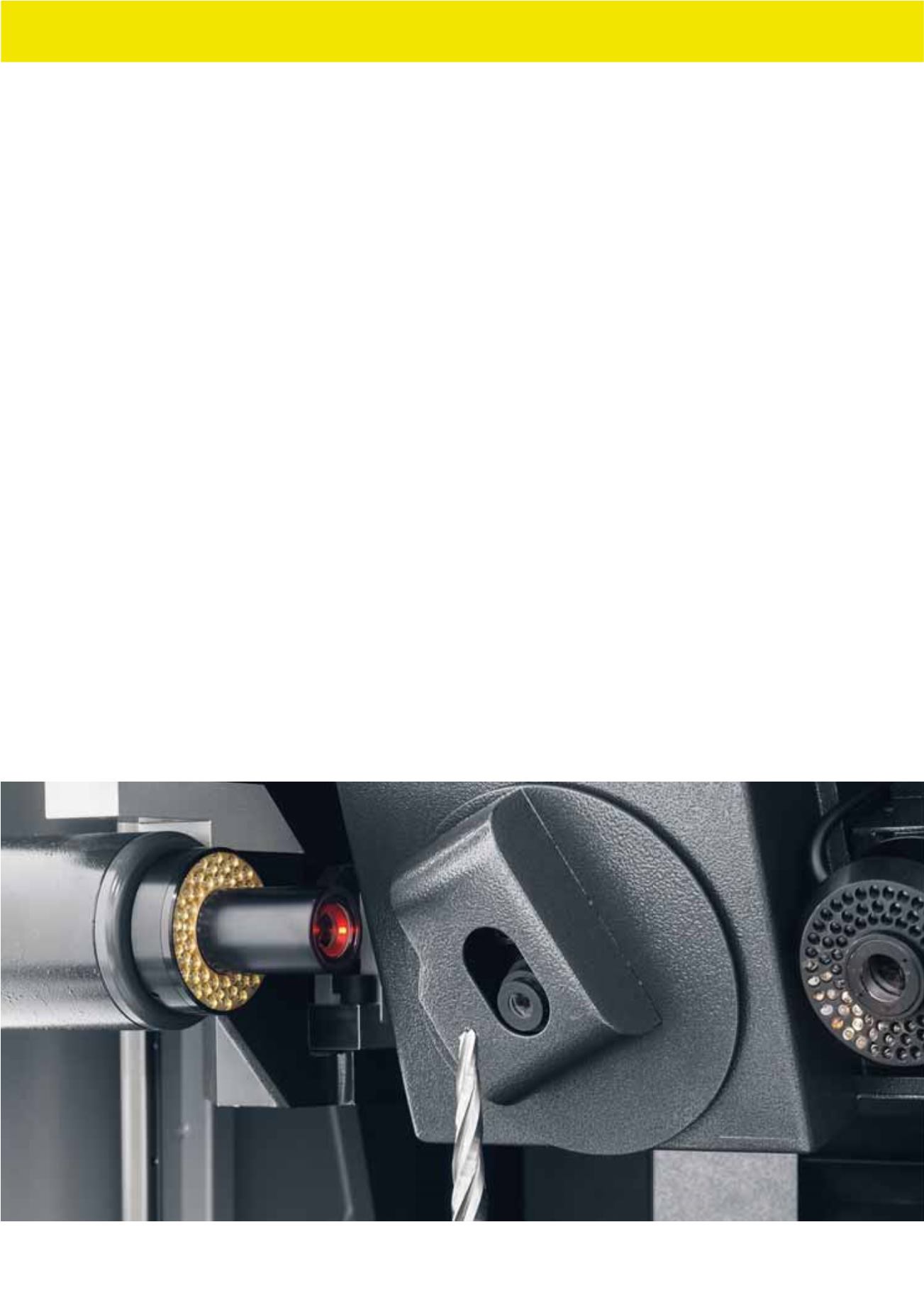
The measurement of edge rounding
is possible without contact using
the pivot-mounted CNC »Z3dCam«
sensor from ZOLLER.
CUTT I NG EDGE PREPARAT ION
27